GDC 2026 Wrapped
Bits of Signum | 3.16.2026


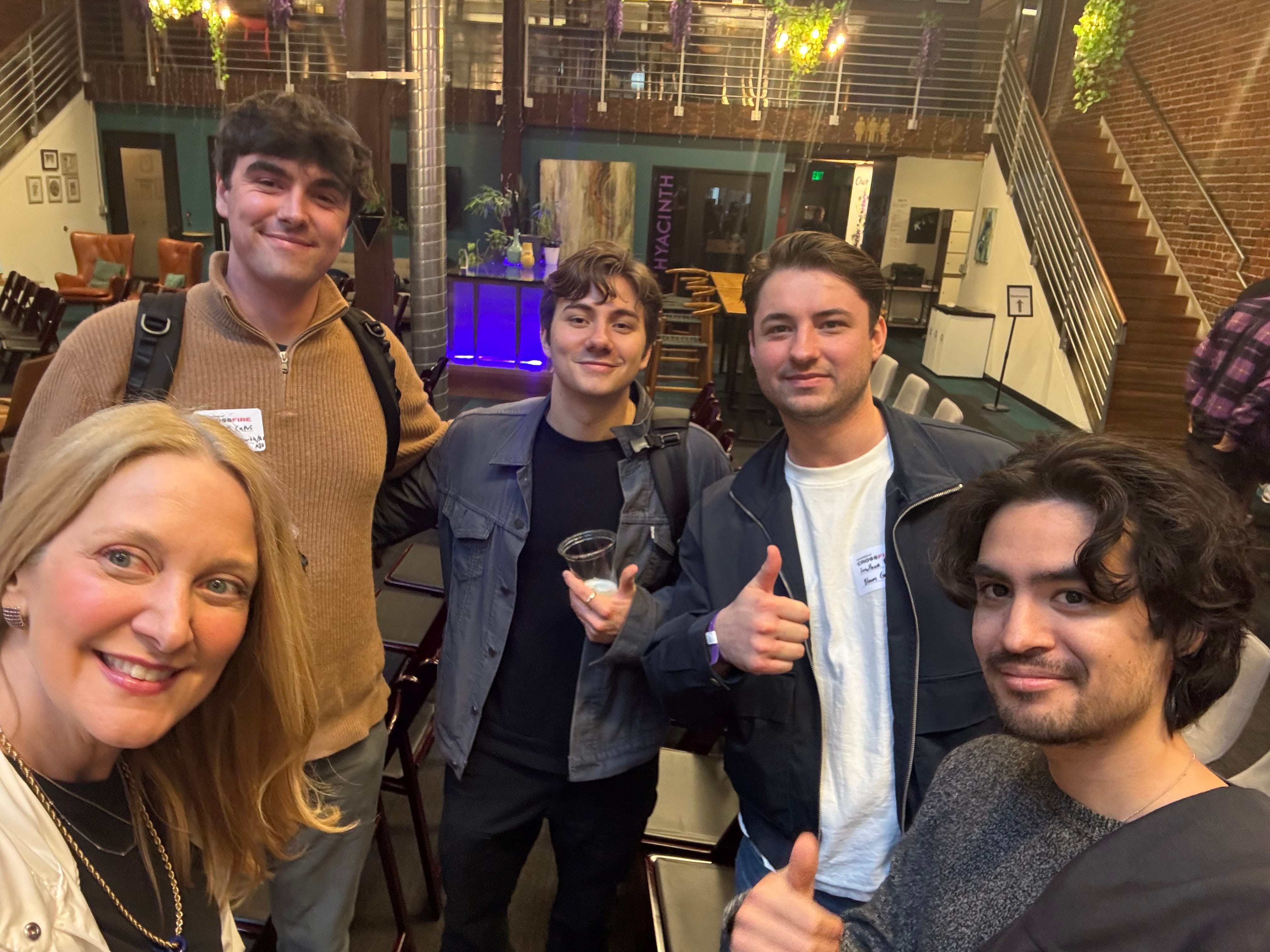
GDC 2026 is a wrap! As we left San Francisco, we were reflecting on the common themes that emerged from our exciting conversations with developers, brands, and companies. Unsurprisingly, we spent the majority of our week (happily) talking UGC and our entry into UEFN/Fortnite through our collaboration with Bloom Games! We had a great time working with Bloom Games’ Co-founder Jonathan Danzi, and we are excited to keep the momentum going after GDC.
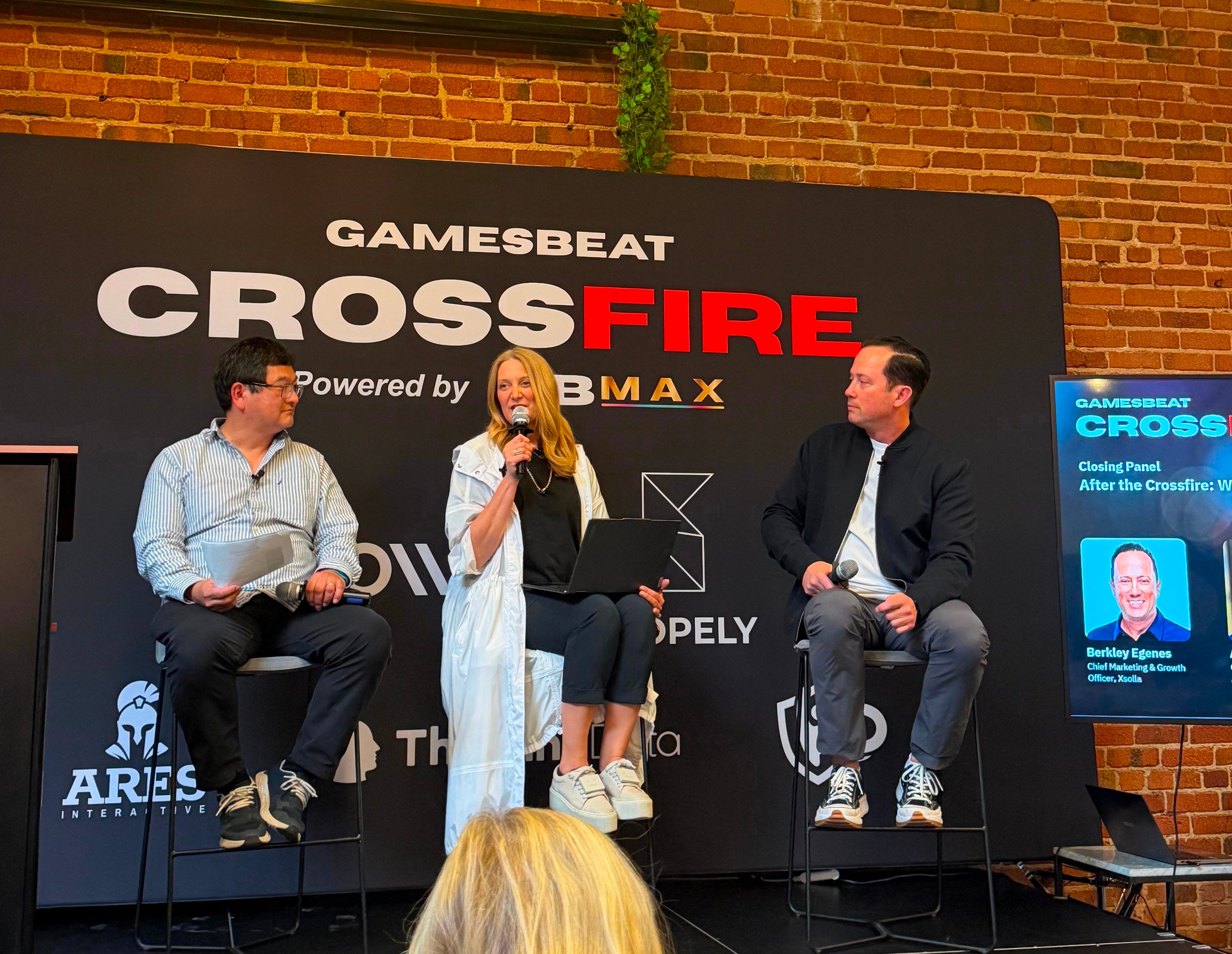
As noted in our pre-GDC posts, we were especially excited about being invited to join the post-debate panel at GamesBeat Crossfire. In fact, the conference reflected the debate topics: age verification and the regulatory landscape, UGC, and, more broadly, how AI will impact the industry.
Dean Takahashi and the team at GamesBeat did an excellent job of providing structure to the complexities of these topics. In the final panel (Dean Takahashi, Xsolla’s Berkley Egenes, Signum Growth | AD8 Pop’s Angela Dalton), we discussed our views on various points of debate across the three earlier panels. Each of these topics is highly nuanced, but generally, the industry is being shaken from many directions.
Age Verification:
On March 4th, we published our report on age verification, “Age Rage Beyond Roblox | Online Age Verification Becomes the Norm,” a response to the outrage from the global policy rollouts by Discord and Roblox. We knew then that this topic would be top of mind, and two new updates reinforced that. Spain’s data protection authority fined the age assurance app Yoti over violations of the EU’s General Data Protection Regulation. Congressman Brett Guthrie, Chairman of the House Committee on Energy and Commerce, published an OpEd in the Washington Post titled “Congress is done waiting for Big Tech to protect kids online,” as the committee introduced the Kids Online Safety Act.
Overall, as we met with companies and developers at the conference, the sentiment centered on the idea that age verification and increased protections were necessary, but the process would likely be messy. One common refrain was disbelief that country-specific implementations could sync to reliably protect children. This is a substantial loophole for any tech-savvy kid using VPNs to jump from one regulatory region to another. European countries, for example, have historically been more readily prepared to adopt “extreme” policies labeled “citizen protection.” In contrast, the United States is often slower to adopt due to debates over constitutional freedoms. Patricia Vance, the President of the Entertainment Software Rating Board, pointed out that age-assurance policies have significant First Amendment implications.
Our view remains largely unchanged. As k-ID’s senior legal counsel, Joe Newman commented, “The train has left the station.” The remaining question is: what are the best ways to implement these protections to ensure safety and data privacy? As our own Angela Dalton said on stage, we are optimists and believe that technologies like ZK proofs, a blockchain-based mechanism, already exist to ensure that under-18s are not banned from the internet and, at the same time, they are not handing over passports and face scans. For now, we and the industry will be watching closely as governments debate how to implement online child safety laws.
UGC:
GDC 2026 feels like a significant turning point for UGC. We have long known that UGC, especially on Roblox and Fortnite, is an unstoppable force revolutionizing the gaming industry. On February 16, 2026, Mathew Ball published his detailed investigation, The State of Video Gaming in 2026, which validated our beliefs and brought them to the forefront of the industry just three weeks before GDC. He reported that “Roblox is 60% of Spend Growth Outside China since 2021… [and] Roblox’s average quarterly engagement is now as large as that of Steam, PlayStation, and Fortnite combined.” Ball’s report sent waves through the industry, and as we flew into San Francisco, we knew it would be the foundation of GDC 2026.
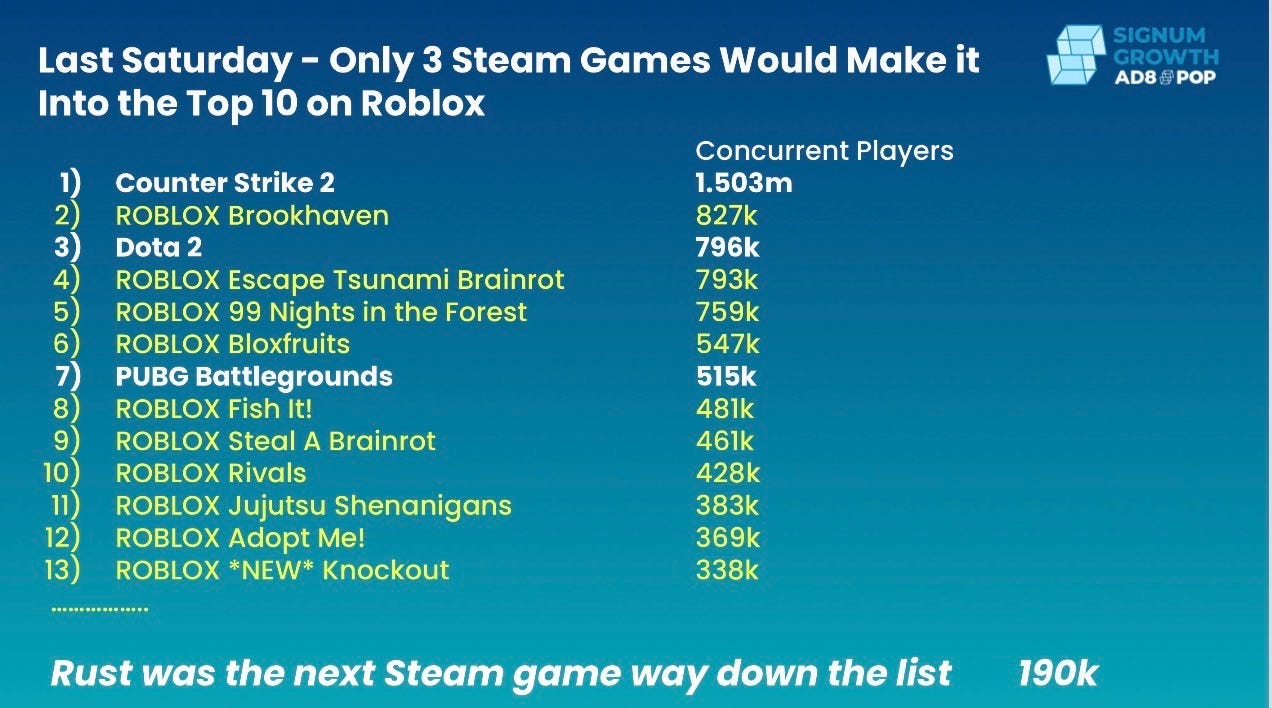
We have seen firsthand how UGC platforms empower developers to succeed and create fun games at increasing rates. In an industry facing widespread layoffs and uncertainty, we see UGC as a vital lifeline for developers who want to continue making AAA games as traditional game studios shrink. It is now about reaching audiences where they already are, and as we demonstrated on February 26, 2026, only 3 Steam games would make it into the top 10 on Roblox.
Developers are not the only ones grappling with the rise of UGC; more and more brands are trying to break into the space. Gone are the days of billboards and bus benches; brands can now integrate into UGC games and meet audiences natively where they are already playing, creating a more memorable interaction. As we always say, merge onto the highway of behavior that is already happening. This topic buzzed through GDC events, including a lunch we hosted for developers. Nearly any brand can integrate into UGC, as long as it is willing to think outside the box - UGC is not traditional media (and you don’t want it to be!).
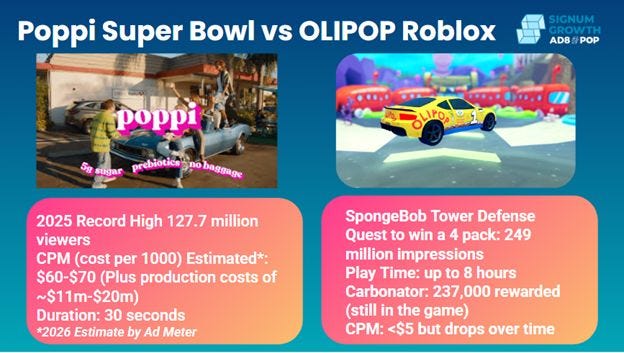
To demonstrate this, we recently did an analysis comparing the cost of a 2025 Poppi Super Bowl ad to our OLIPOP ad in SpongeBob Tower Defense with Wonder Works Studio.
The comparison shows that the Roblox interactive advertisement results in a declining CPM (cost per thousand) as users continue to engage with brand assets long after the campaign ends. For example, with OLIPOP, ~237,000 “Carbonators” were rewarded during the campaign, and players are still driving those cars around the game months later.
We had a great time discussing exciting branding opportunities at GDC, and we can’t wait to help more brands become playable in Roblox and Fortnite!
Artificial Intelligence:
Unsurprisingly, advances in artificial intelligence have transformed every industry, and gaming is no exception. After a week of seeing how developers across the industry are using AI, we are especially excited about what these new technologies will do for the ‘bedroom developer.’ UGC platforms draw their popularity from the ability to create with little traditional technical ability. We have been amazed to witness the incredible speed and creativity unlocked in an environment with low technical barriers to entry.
We believe that AI is not about replacing human creativity, but about empowering it. As Susan Cummings, the co-founder of 10six Games, explained in her GamesBeat Panel, AI does not have the power to “make the fun,” but her team figured out how to train it in the team’s art style and guide it from there to unlock speed and efficiency.
Roblox, for example, announced on February 4, 2026, AI-powered 4D objects, “where the fourth dimension is interaction.” This means that players will be able to create and directly interact with their objects, such as a car that drives or a plane that flies. Currently, these abilities are limited to the ‘schemas’ or blueprints that exist, but Roblox shared plans to expand AI capabilities, enabling world-building models described as “real-time dreaming.” We see this as Roblox’s greatest strength: turning cutting-edge technology into practical tools for everyday creators.
UGC is Here To Stay
In conclusion, GDC 2026 feels like a significant turning point for UGC. Most of the week was spent discussing opportunities for partnership and growth rather than pitching to a skeptical audience. Companies and developers, both inside and outside the industry, are recognizing that this behavior is likely here to stay and are finding their place in the scene. From branding and creation to AI, UGC platforms were at the center of any ‘future of gaming’ discussion and at the heart of conversations on innovative technologies. It is an exciting moment for Signum Growth | AD8 Pop. We left reenergized, not only as witnesses to the future of gaming, but as participants who will shape it.